Sync Licensing: The Independent Artist’s Most Profitable Gateway
How TV, Film, Games, and Ads Turn Original Music Into Real Revenue
Sync Licensing for Beginners: How to Land Your First Deal
You make great music, but getting paid for it feels impossible. Most streaming platforms pay fractions of a cent per play, and traditional record deals are out of reach for independent artists. Meanwhile, you watch TV shows and commercials featuring songs from musicians just like you, wondering how they got there. Sync licensing for beginners might sound intimidating, but it's one of the most accessible revenue streams available to independent musicians today.
Sync licensing lets you license your music for use in TV shows, films, video games, and commercials. A single placement can earn you anywhere from hundreds to thousands of dollars, plus ongoing royalties and exposure to millions of viewers. Better yet, you don't need a major label or expensive connections to get started. Music supervisors actively search for fresh, quality tracks from independent artists who understand how the industry works.
This guide walks you through everything you need to land your first sync deal. You'll learn how sync licensing actually works, how to prepare your music and metadata, which routes to market make sense for your situation, how to pitch directly to music supervisors, and how to negotiate your first contract. By the end, you'll have a clear roadmap from submission to getting paid.
Understanding how sync licensing works
Sync licensing involves two separate rights that you need to control or license before your music can appear in any media project. The synchronization license covers the underlying composition (the song itself), while the master use license covers the specific recording. When you own both as an independent artist, you have complete control and keep all the fees. This puts you in a stronger position than artists signed to labels or publishers who must split their earnings.
The two main components of a sync deal
Master rights control the actual recording you created in the studio. If you recorded, mixed, and mastered your track yourself or paid for the session, you typically own these rights outright. Publishing rights control the underlying composition, including the melody, lyrics, and chord progression. You own these automatically when you write a song, though many artists sign portions away to publishers or co-writers.
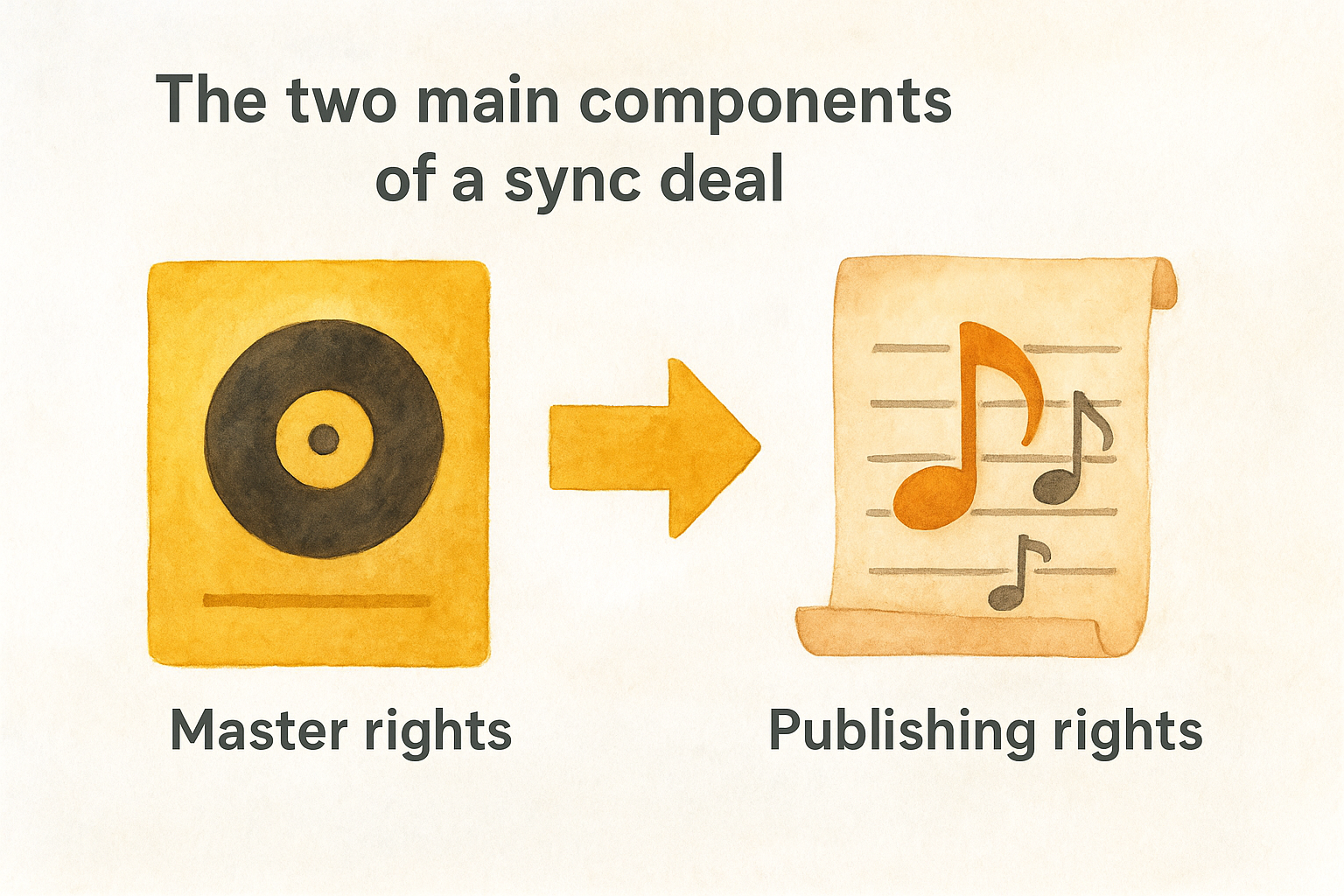
Music supervisors need both licenses cleared before they can use your track. They won't wait weeks for you to track down a co-writer or figure out who owns what percentage. You must provide immediate confirmation that you control 100% of both rights, or have the authority to grant both licenses on behalf of all rights holders. This requirement alone eliminates many artists from consideration.
Clear ownership of both master and publishing rights gives you the fastest path to sync placements and maximum earning potential.
Who pays for what (and when)
You receive an upfront sync fee when the production company licenses your music. This one-time payment ranges from $500 for small web series to $250,000+ for major film placements. The fee compensates you for the right to synchronize your music with visual media. Sync licensing for beginners often starts with smaller placements in the $500 to $5,000 range, which still provides meaningful income compared to streaming royalties.
Backend royalties generate ongoing revenue after the initial placement airs. Your performing rights organization (ASCRO, BMI, or SESAC) collects these payments when your music plays on television, in theaters, or through streaming platforms. A single 30-second commercial spot airing during prime time can generate $1,000 to $3,000 in performance royalties over several months. National campaigns running for years produce substantial passive income long after you signed the initial deal.
Common sync licensing scenarios
Television shows typically pay $1,000 to $5,000 for background instrumental music in a single episode. Featured vocal placements in key scenes command $5,000 to $15,000, while theme songs can reach $25,000+. You receive these fees per episode, so a song appearing in five episodes generates five separate payments plus ongoing performance royalties each time those episodes air.
Independent films working with limited budgets often offer $500 to $2,500 per track, with festival darlings sometimes requesting festival-only licenses for free in exchange for exposure. Major studio films pay $15,000 to $50,000+ for minor placements, while trailer spots can reach six figures. Commercials vary wildly based on the brand's budget and media buy, ranging from $2,000 for regional spots to $150,000+ for national campaigns from major brands.
Video games license music in two main ways: they either pay a flat fee for unlimited use ($5,000 to $25,000 typical) or negotiate a buyout that transfers all rights permanently. YouTube creators and corporate videos represent the entry-level market where you'll find the most opportunities as a beginner, typically paying $100 to $1,000 per project. These smaller placements help you build your catalog of credits and relationships with music supervisors who may hire you for bigger projects later.
Step 1. Get your music and metadata ready
Music supervisors reject hundreds of poorly prepared submissions every week before they even listen to a single note. Your track might be perfect for their project, but if your files don't meet technical standards or your metadata is incomplete, they'll move on to the next artist immediately. Sync licensing for beginners requires attention to detail at this preparation stage, because you rarely get a second chance to make a first impression.
File format and quality requirements
You need to deliver broadcast-quality audio files in specific formats that production teams can drop directly into their editing software. Export your final masters as WAV or AIFF files at minimum 16-bit/44.1kHz resolution, though many supervisors prefer 24-bit/48kHz for television and film projects. MP3s work only for initial pitches and preview purposes, never for final delivery.
Audio quality issues eliminate your track from consideration instantly. Remove any clipping, distortion, or excessive compression that might cause problems during broadcast. Your mix should peak between -6dB and -3dB to leave headroom for the post-production team. Export both a full mix and a separate instrumental version without vocals, since many placements use only the music bed underneath dialogue.
File naming follows a strict convention that prevents confusion during production. Use this format: ArtistName_TrackTitle_BPM_Duration_Version.wav. A proper example looks like SarahJohnson_MidnightDrive_120BPM_3m24s_Instrumental.wav. This system lets supervisors instantly identify tempo, length, and version without opening the file.
Essential metadata fields
Embedded metadata tells supervisors everything they need to know about your track without sending additional emails. Tag your files with complete publishing information including your PRO affiliation (ASCAP, BMI, or SESAC), IPI number, and percentage ownership split if you have co-writers. Missing metadata creates legal problems that supervisors won't waste time solving.
Your description matters as much as your music. Write specific, searchable descriptions that include mood, genre, instrumentation, and potential use cases. Compare "upbeat indie rock" (vague) with "energetic indie rock with driving drums and electric guitar, perfect for sports montages or car commercials" (actionable). Include relevant keywords like "motivational," "nostalgic," or "suspenseful" that match how supervisors search their databases.
Complete, accurate metadata separates professional submissions from amateur attempts and directly impacts how often supervisors discover your music.
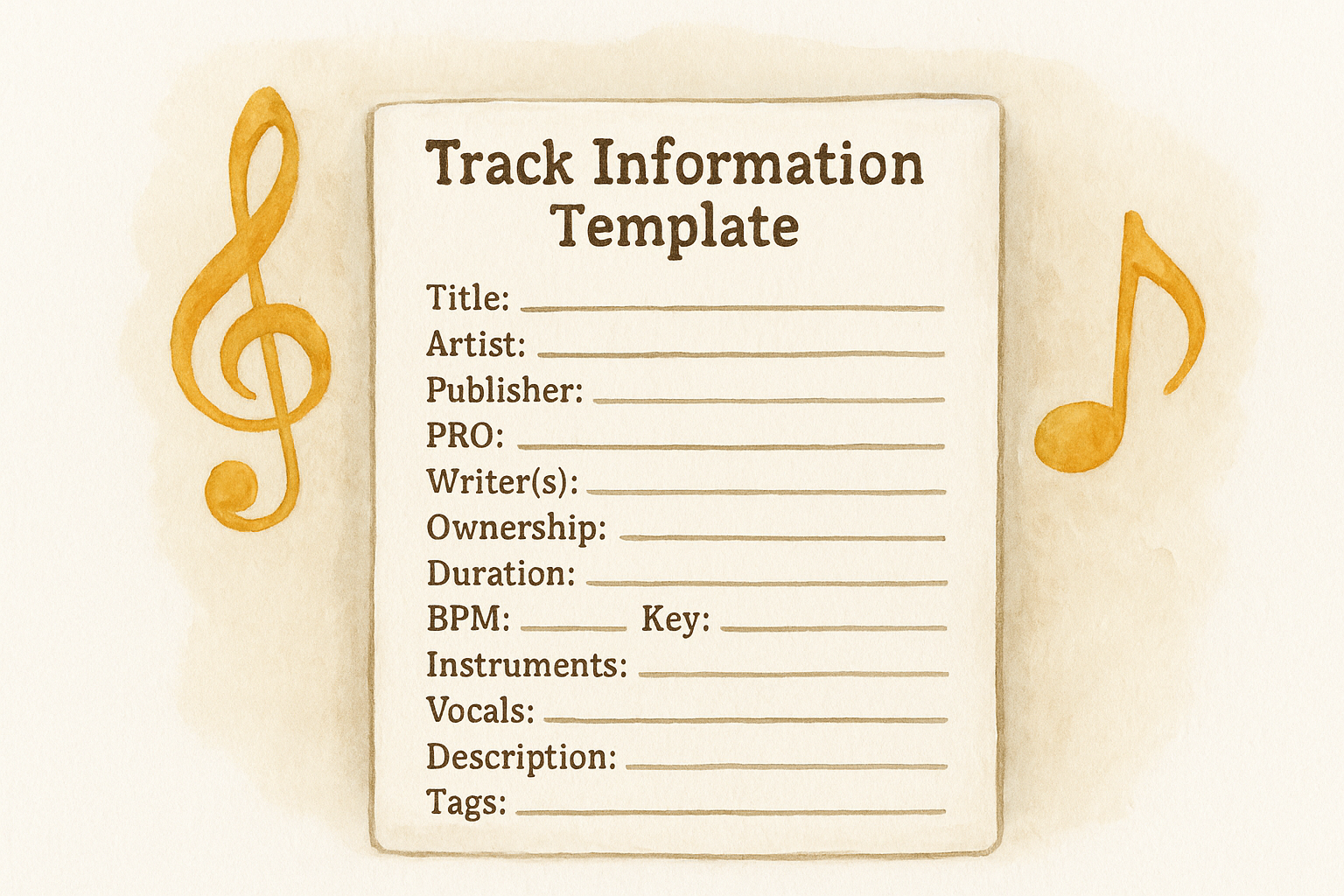
Create this information sheet for every track:
Track Information Template
Title: [Song Title]
Artist: [Your Artist Name]
Publisher: [Your Publishing Company or "Self-Published"]
PRO: [ASCAP/BMI/SESAC]
Writer(s): [Full Legal Names]
Ownership: [Your %]
Duration: [MM:SS]
BPM: [Number]
Key: [Musical Key]
Instruments: [List all instruments]
Vocals: [Male/Female/None]
Description: [2-3 sentence pitch]
Tags: [Comma-separated moods and uses]
Fill out this template completely before you pitch a single track to anyone.
Step 2. Choose your route to market
You have three primary routes to get your music in front of decision-makers who license tracks for media projects. Each path offers different levels of control, speed, and earning potential. Sync licensing for beginners works best when you combine multiple approaches rather than relying on a single strategy, but you need to understand the tradeoffs before committing your time and catalog.
Direct pitching to music supervisors
Pitching directly gives you complete control over your relationships and keeps 100% of your sync fees without splitting revenue with middlemen. You research projects currently in production, identify the music supervisors attached to those projects, and send targeted submissions that match their specific needs. This approach requires the most work but builds valuable industry relationships that lead to repeat placements.
Direct pitching works best when you have strong networking skills and time to research opportunities. You'll spend hours identifying contact information, watching casting notices, and crafting personalized emails. Success rates remain low (expect 1-2% response rates initially), but landing even one placement through direct contact often opens doors to future projects with the same supervisor.
Working with sync licensing libraries
Sync libraries accept your tracks into their searchable catalogs that music supervisors browse when they need music quickly. You upload your files once, and the library handles all marketing, pitching, and licensing administration. Most libraries operate on non-exclusive agreements, letting you submit the same tracks to multiple platforms simultaneously while keeping your ability to pitch directly.
Libraries typically take 30% to 50% of sync fees plus a percentage of backend royalties. Popular platforms like AudioSocket, Songtradr, and Musicbed each serve different market segments, from corporate videos to network television. Submit your best 10-20 tracks to three to five libraries that align with your genre rather than uploading your entire catalog everywhere.
Non-exclusive library deals let you maximize exposure across multiple platforms while maintaining control of your catalog and direct pitching rights.
Partnering with sync agents or publishers
Sync agents and publishers offer exclusive representation for your catalog in exchange for actively pitching your music to their established network of music supervisors. They invest significant time marketing your tracks because they earn nothing until you get placed. Expect to split fees 50/50, though some deals reach 60/40 in your favor for highly sought-after catalogs.
This route makes sense when you have at least 50 high-quality tracks ready to license and want someone handling the business side full-time. Legitimate agents never charge upfront fees. They earn only when you earn, aligning their incentives with your success. Research their previous placements and client roster before signing any exclusive agreement that prevents you from pitching those same tracks elsewhere.
Start with non-exclusive libraries while building your catalog and learning the market. Add direct pitching once you understand what supervisors want. Consider exclusive representation only after you've proven your music can generate placements consistently.
Step 3. Research and pitch to music supervisors
Direct pitching requires strategic research and personalized outreach that demonstrates you understand each supervisor's specific needs. Random mass emails get deleted immediately, but targeted pitches that reference current projects and match the supervisor's taste earn responses. You need to identify the right people, craft compelling emails, and follow up without becoming a nuisance.
Finding music supervisors actively seeking music
Start your research by identifying active productions in your genre through industry databases and trade publications. IMDb Pro shows music supervisor credits for thousands of film and television projects, including contact information and their current assignments. Production listings on sites like ProductionWeekly reveal shows in pre-production or active filming stages, giving you timing advantages over artists who wait until projects wrap.
Social media platforms, particularly LinkedIn and Instagram, show what supervisors are currently working on through their posts and updates. Follow 20 to 30 supervisors who work on projects that align with your music style. Their posts often include direct callouts for specific moods or genres they need immediately. Watch the credits of shows similar to your music's vibe, then research those supervisors' other projects to confirm they consistently work in your wheelhouse.
Crafting your pitch email
Your subject line determines whether supervisors open your email. Write specific, project-focused subjects like "Upbeat Indie Rock for Season 3 of [Show Name]" rather than generic phrases like "Check Out My Music." Reference their current project in the opening sentence to prove you did your homework, not just blasted the same email to hundreds of contacts.
Personalized pitches that reference specific projects earn 10x more responses than generic submissions sent to every supervisor you can find.
Use this template structure for sync licensing for beginners who haven't landed placements yet:
Subject: [Genre] for [Specific Project/Show]

Hi [Supervisor Name],

I noticed you're working on [Project] and thought my track
"[Song Title]" might fit [specific scene type or mood you
researched]. It's a [genre] with [key instruments] that
works well for [use case].

Listen: [Streaming Link]
Download: [High-quality WAV link]

I own 100% master and publishing rights. Available for
immediate licensing.

Technical specs:
- Duration: [MM:SS]
- BPM: [Number]
- Instrumental version available

Thanks for your time,
[Your Name]
[Phone]
[Website]
Keep your email under 150 words total. Include direct links to both a streaming preview and downloadable WAV files. Never attach large files to cold emails.
Following up strategically
Wait two weeks minimum before sending a follow-up email. Music supervisors work on tight deadlines, and if your track fit their immediate need, they would have responded quickly. Your follow-up should reference a different project or need rather than repeating the same pitch. This approach shows you're actively tracking their work instead of just pestering them about one submission.
Send follow-ups only twice maximum for any single initial pitch. After two non-responses, add them to your quarterly update list where you share new tracks without expecting replies. Build the relationship slowly through consistent, valuable contact rather than demanding immediate attention.
Step 4. Negotiate fees and contract terms
Music supervisors expect you to negotiate, so don't accept the first offer they present. Most initial offers come in 20% to 40% below what they're actually willing to pay, leaving room for discussion. Understanding standard industry rates and contract terms protects you from signing away rights or accepting payment far below market value. Sync licensing for beginners often involves smaller deals, but even a $500 placement deserves professional negotiation to establish your worth and avoid problematic terms.
Understanding standard fee ranges
Television placements typically range from $1,000 to $15,000 depending on whether your track plays in the background or features prominently in a key scene. National commercials pay $25,000 to $150,000 for major brands, while regional spots settle between $2,000 and $10,000. Independent films with limited budgets might offer $500 to $2,500, but you should request higher fees if they secure major distribution deals later.
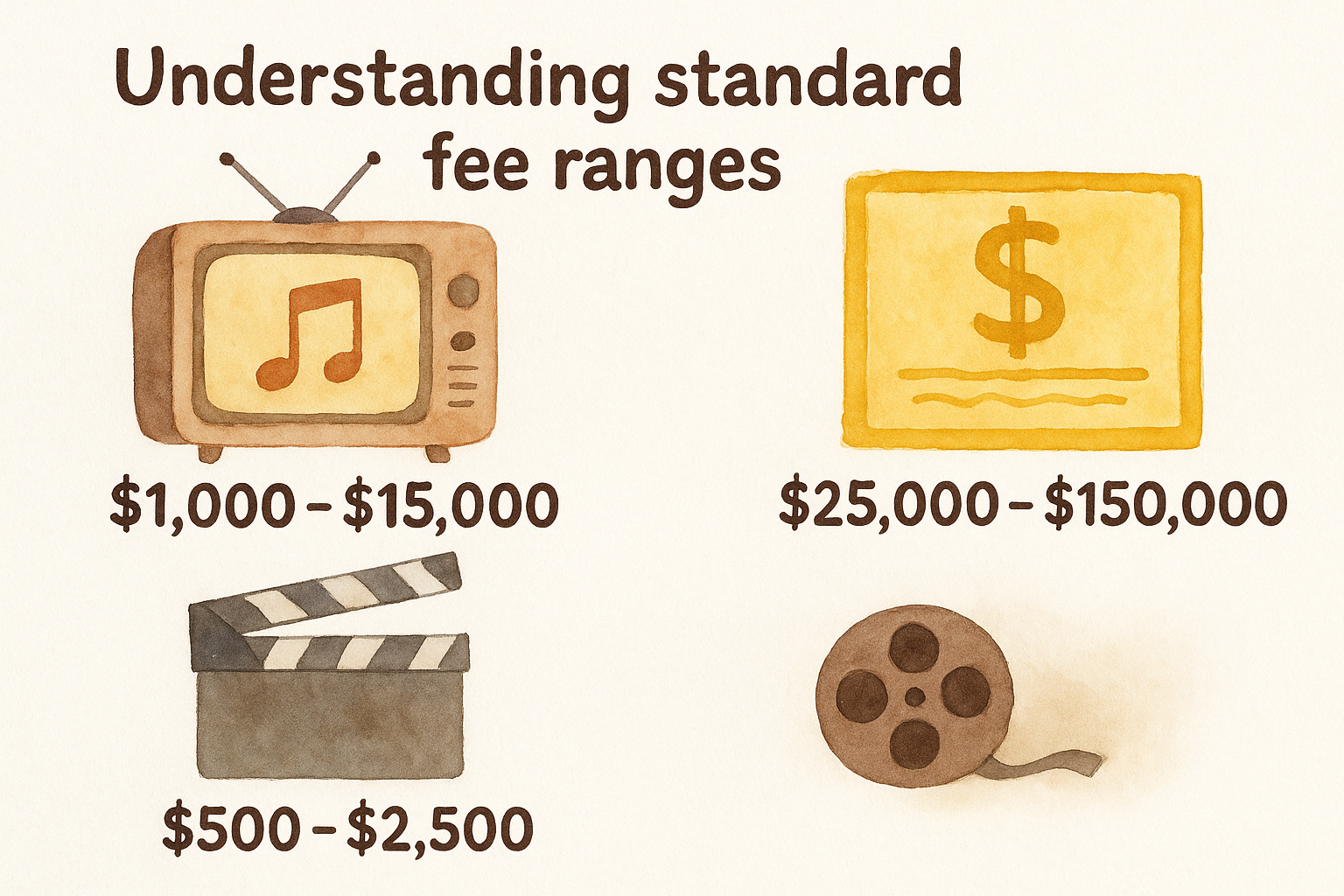
Always ask about the media buy and territory before agreeing to any fee. A $5,000 offer for unlimited worldwide use in perpetuity represents a terrible deal compared to the same fee for a one-year license in North America only. Your fee should increase proportionally with broader usage rights, longer terms, and larger territories.
Key contract clauses to review
Every sync contract contains these critical terms that determine your rights and payment:
Essential Contract Elements
- Grant of Rights: What rights you're licensing (master, publishing, both)
- Term: How long they can use your music (1 year, 5 years, perpetuity)
- Territory: Where they can broadcast (North America, worldwide, specific countries)
- Media: Platforms allowed (TV only, all media, streaming excluded/included)
- Exclusivity: Can you license the same track elsewhere simultaneously
- Payment Terms: When you get paid (30, 60, 90 days from signing or airing)
- Clearance: Who handles additional clearances if needed
- Credit: Whether you receive on-screen attribution
Payment terms matter as much as the fee amount. Request payment within 30 days of contract signing rather than waiting until after the content airs, which could take months. Some contracts require you to deliver proof of copyright ownership before processing payment, so prepare these documents in advance.
Negotiate payment timing separately from the sync fee, since delayed payment hurts your cash flow regardless of the total amount you eventually receive.
When to walk away from a deal
Reject any contract demanding perpetual worldwide rights for less than $10,000, unless you're licensing to a non-profit or passion project where exposure provides genuine value. Watch for buyout clauses that transfer ownership of your master recording permanently, eliminating future licensing opportunities and backend royalties. These deals rarely benefit independent artists.
Walk away from contracts with vague usage terms that don't specify exact media types, territories, or duration. Supervisors sometimes request "festival rights only" for free, which works fine, but converting that into unlimited commercial use without additional payment crosses the line into exploitation.
Key terms every sync artist should know
Understanding industry terminology prevents confusion during negotiations and helps you recognize unfavorable contract terms before signing. Music supervisors use specific language when discussing rights, fees, and usage parameters. Learning these essential terms protects you from inadvertently agreeing to deals that limit your earning potential or surrender rights you intended to keep. Sync licensing for beginners requires mastering this vocabulary to communicate professionally and spot problematic clauses immediately.
Rights and ownership terminology
Master rights control the specific recording you created, including the performance, mix, and production elements. You own these automatically when you record and produce your track without a label's involvement. Publishing rights (or composition rights) protect the underlying song, covering melody, lyrics, harmony, and structure. These exist separately from the recording and belong to whoever wrote the song.
Mechanical rights govern reproduction and distribution of your composition, while performance rights cover public performances through broadcast, streaming, or live venues. Your PRO collects performance royalties automatically when your track airs, but mechanical royalties require separate administration through services like the Mechanical Licensing Collective.
Fee and payment structures
Upfront sync fees represent one-time payments for licensing your music to a specific project. These fees range from hundreds to hundreds of thousands of dollars depending on the production's budget and your track's usage. Backend royalties (or performance royalties) generate ongoing revenue each time the content airs on television, streams online, or plays in theaters.
All-in fees combine both master and publishing payments into a single number, simplifying negotiations when you control both rights. Conversely, split fees pay separate amounts for master and publishing rights, typically dividing the total 50/50 between the two components. Always clarify which structure the supervisor is quoting to avoid confusion about your actual payment.
Understanding whether a quoted fee covers "all-in" or just one right prevents you from accepting half of what you thought you were getting.
Contract and usage terms
Territory defines geographic regions where the licensee can use your music, ranging from local markets to worldwide distribution. Term specifies how long they can use your track, from one-year licenses to perpetual rights that never expire. Media describes platforms and formats covered, such as broadcast television only versus all media including streaming, theatrical, and digital distribution.
Gratis licenses grant free usage rights, typically for film festivals, student projects, or charitable causes in exchange for exposure and credits. Work-for-hire agreements transfer complete ownership to the client, eliminating your future rights and royalties. Avoid these contracts unless the upfront payment significantly exceeds standard sync fees, since you lose all backend revenue and relicensing opportunities permanently.
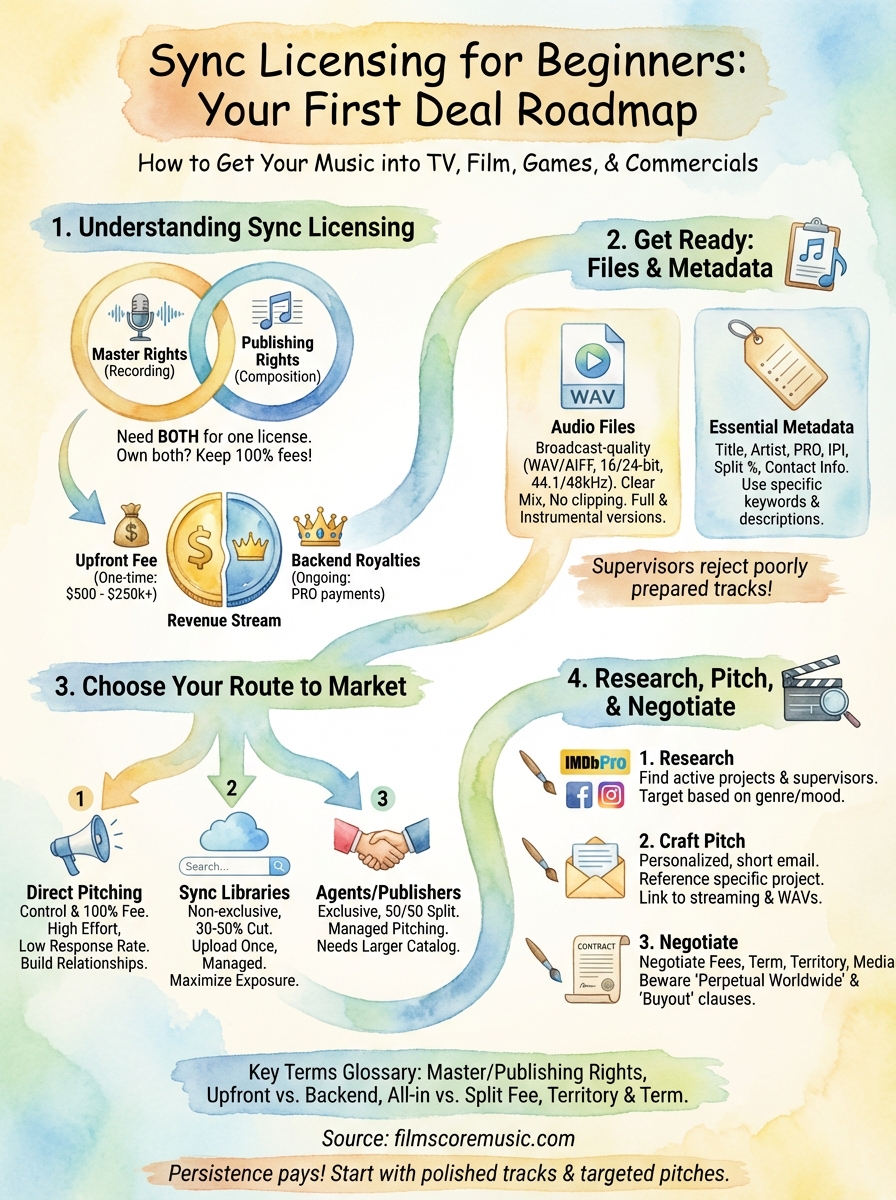
Final thoughts on your sync journey
Landing your first sync placement requires preparation, persistence, and professional presentation. You now understand how sync licensing works, what music supervisors expect, and how to navigate contracts without surrendering rights or accepting below-market fees. Sync licensing for beginners starts with mastering these fundamentals, then building on each small success until you establish consistent placements that generate meaningful revenue alongside your streaming income.
Your action plan begins today. Prepare five polished tracks with complete metadata, submit them to three non-exclusive libraries, and identify ten music supervisors working on projects that match your style. Send one personalized pitch per week while continuing to create new music. Track every submission, follow up strategically, and learn from each response or rejection. Browse catalogs like the FilmScoreNews Music Catalog to study successful sync tracks and understand what supervisors license. Consistency matters more than volume, so focus on quality submissions to appropriate opportunities rather than blasting hundreds of random contacts with generic emails.
211